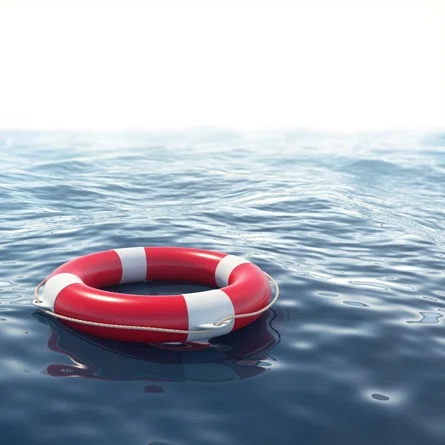
I can see it so clearly. I am floating in a lifebuoy, a mile off of shore, tears streaming down my face. The waves bob up and down and saltwater fills my mouth as I wail, “I’m drowning!” My husband is holding the rope of the buoy and my family is on another boat at a slight distance looking on. “You’re not drowning,” my husband says. “I’ve got you right here. You said you wanted to learn how to swim.”
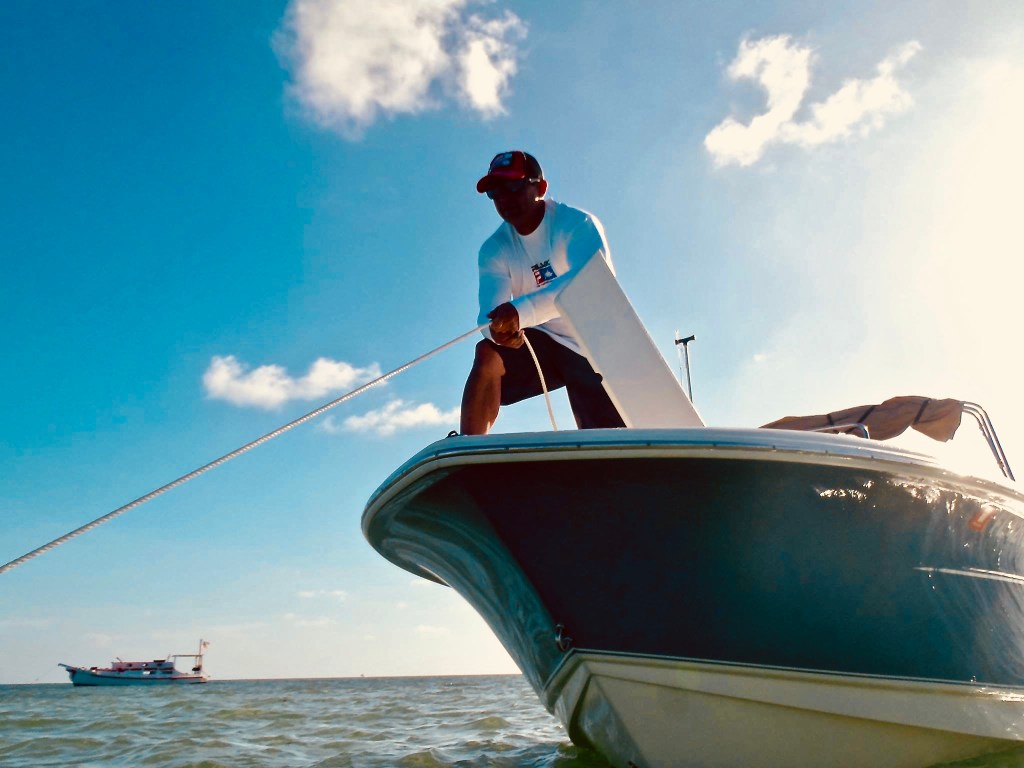
My husband is making good on his promise the day he proposed, when we were literally on the water. This time on his jet ski, crashing waves all around us and me holding on for dear life. He had purposely taken me to a rough area past the inlet into the open ocean. No big deal on a boat, but a decidedly different experience on a Sea Doo. “This might be our life,” he explains, confidently navigating the breaks with practiced ease, “but I promise I’ll take care of you. I’ll keep you safe.” He brings us to a calmer area where he says, “I want to marry you” and he pulls out a ring. Like any practical woman, my first thought is to ask if the ring is insured since we are on a jet ski in the ocean. Of course, it isn’t, but at least it is tied to his bathing suit pocket.

For nearly thirteen years of marriage he has kept his word. He’s looked after me and protected me as we navigate life together. Still, it’s been fairly easy sailing. Now he’s displaying the last remnants of patience.
He’s right. I did ask for this. I could have stayed at my job as a middle school English teacher at a private school. In my mind, I’m back in the buoy. “There’s nothing wrong with being a teacher,” I tell myself. “Why on Earth did you think you could do this?”
“That’s true,” a small voice inside me answers. “Except that your soul wanted to travel the world and bring other people with you.”
Not only am I terrified, I’m ashamed and guilt-ridden. For my entire life I’ve had every privilege, every conceivable opportunity, every blessing. While I flail in my life preserver, I think about all the other women who have been forced to swim without a choice–no rope, no boat, no shore on the horizon. I’m in awe of them and humbled by their courage.
I’m hit with a fresh wave of self-loathing. I’m back in summer camp, learning how to water ski. I’m 11 years old and the session is 3 weeks long. It takes me 2 weeks just to be able to stand up on skis. Two weeks of constantly being pulled and cajoled while I flop over, take water up the nose, push through humiliation. The only other girl in my class is two years older, and she stands up on the first try. By the end of the week she’s starting from a slalom. When Parents Day comes at the end of the session, my single accomplishment is being able to hold on with all my might as we circumnavigate the lake. Only at the very end do I work up the courage to cross the wake. My mother cheers me on, hollering from the boat like I’ve won the Olympics. My father, more subdued, grins widely. I didn’t learn this self-criticism from them. So where does it come from?
When I first decided I would follow my dreams and leave teaching, I was safely on shore. From that vantage point, the other side didn’t seem so far away. “A ship in the harbor is safe, but that’s not what ships are made for,” I insisted. I convinced my husband to support me on this journey, and he prepared the boat.
Along the way, a cruise ship came. “You can join us,” the captain offered. “We’re headed to a different port, but we’ll come back this way eventually.” I declined. We passed sailboats. “You can follow us. We know the way,” they promised. I opted out. “Are you sure you don’t want to try them?” my husband asked. “No,” I insisted. “I have a different vision in mind.”
A tugboat pulled up. “If you’re having trouble, we can tow you back.” I demured. Should I? Reluctantly, I kept my eyes on the horizon.

Now I’m bobbing in the sea, and I’m wondering if I’m not the man on the roof of the house in the religious parable. A man is trapped during a flood and he prays to God to save him. A neighbor offers to drive him away in his truck. He says no. The water rises. Another group comes by in a boat and urges him to join them. He keeps waiting for God. Finally, he is on the roof, and a helicopter hovers overhead offering him a ladder. He declines and the floodwaters overtake him and he drowns. When he goes to heaven he asks God, “Why didn’t you save me?” God replies, “I sent you a pick-up truck, a boat, and a helicopter. What else could I possibly do for you?” Were the cruise ship, the sailboats, and the tugboat my answers from God? Am I drowning now because of my own stubbornness?
I take deep breaths. I’m not drowning. I’m floating. This didn’t happen to me. I chose it, and now I have to let go and swim. I’m not alone. My family is right there, and I can see paddle boarders and kayakers in the distance. On the other shore there’s a whole marina.
This is the adventure. This is what I signed up for. I will get there. It just might take me longer than other people and look a lot less elegant. But this is my wild life, and if I put my head down, take it one stroke at a time, and remember to breathe, I’ll get used to being in the water. I might even find I like it.
 Wildlife & Water Adventures